Veneers (Dental Veneers) are a dental treatment used to improve the appearance of teeth. The materials used are typically porcelain or composite, and these materials are bonded to the front surface of the teeth. Veneers are designed to adhere firmly to the tooth surface in order to improve the shape, color, size, or length of the teeth. They can also help correct dental issues such as misaligned teeth, chipped teeth, gaps between teeth, cracked teeth, small teeth, or uneven tooth color.
Veneers can create a beautiful, natural-looking smile. Porcelain veneers are highly durable and can last 10–15 years, while composite veneers generally last around 5–7 years. The veneer process usually includes a dental examination, slight reshaping of the tooth surface to prepare the area, and bonding the veneers onto the teeth. However, veneers do require special care and are more expensive than many other dental treatments.
Materials Used for Veneers
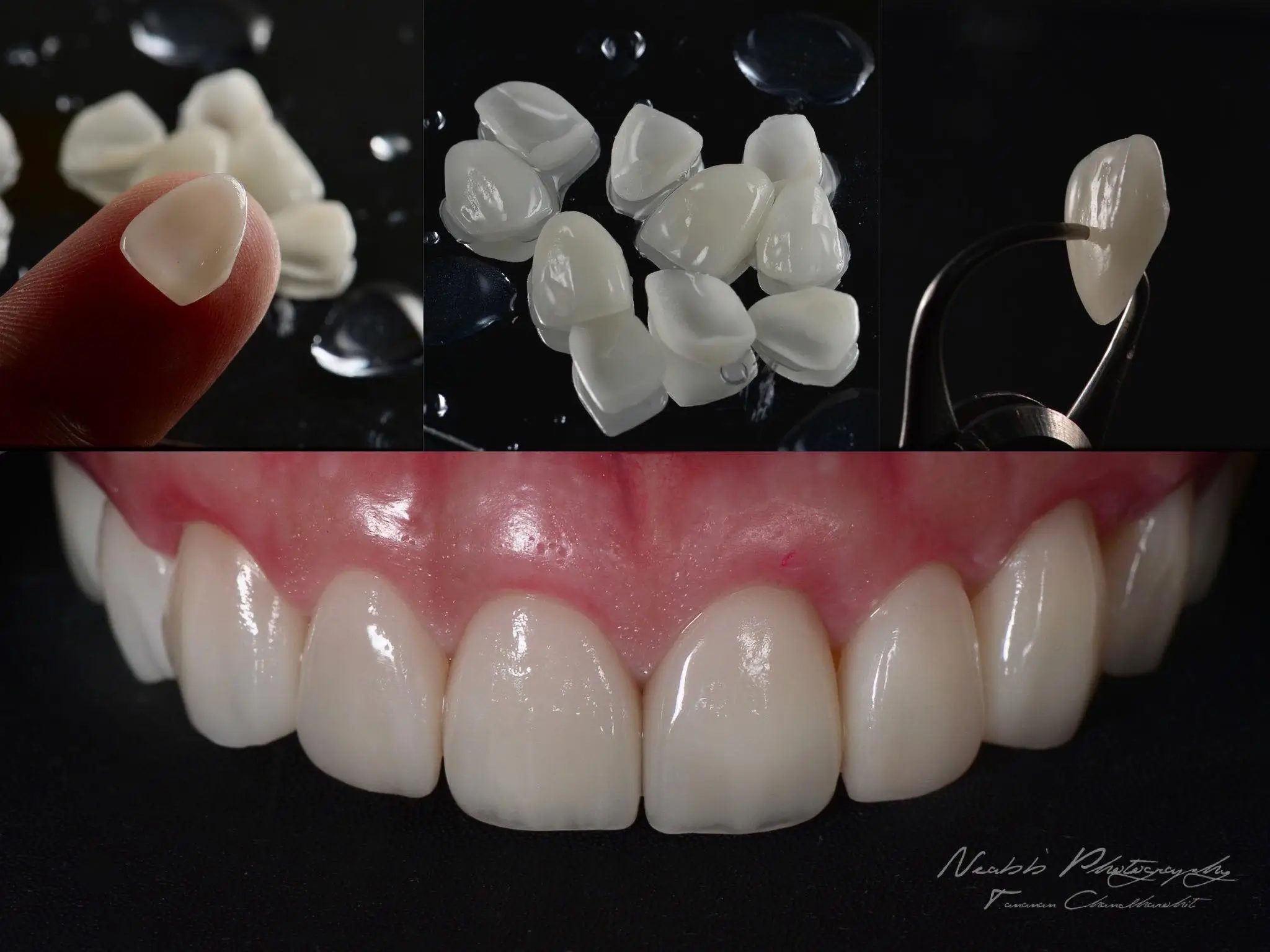
There are two main types of veneer materials.
The first type is ceramic, which is popular because of its durability, long lifespan, and light-reflecting properties that make it look the most like natural teeth. In addition, ceramic veneers are resistant to bacteria and discoloration. However, they are more expensive.
The second type is composite, which has the advantage of being more affordable and faster to place. It is the same type of material used in dental composite resin fillings. Composite veneers are easier to repair if wear occurs, but they have a shorter lifespan compared with porcelain. They are suitable for people with uneven tooth color, small teeth, chipped teeth, gaps between teeth, or slightly crooked teeth, especially those who have a more limited budget.
Veneers vs Crowns: What’s the Difference and Which Is Better?
Veneers are a dental treatment used to improve the shape and color of teeth. They are suitable for correcting minor dental concerns, such as improving tooth color, closing small gaps, or reshaping teeth that are uneven in appearance. The advantages of veneers are that they make teeth look more attractive and whiter, require only minimal tooth reduction, and are fairly resistant to staining.
Crowns, on the other hand, are used for teeth with more significant damage, such as teeth broken from decay or non-vital (dead) teeth. Crowns help strengthen the tooth, improve chewing function, and can also improve the shape of the tooth. This treatment requires more tooth reduction than veneers, because the tooth must be reshaped enough for the crown to fit over it. One disadvantage is that the tooth may become sensitive in the future. Crowns are somewhat similar to artificial coverings over the tooth, and there is still a risk of decay if oral care is poor. If someone has problems involving the tooth root, the dentist may recommend a dental implant, which is considered the best tooth replacement option.
Who Are Veneers Suitable For?
Veneers are suitable for people with the following dental concerns:
- Teeth that have changed color, are yellow, do not look naturally white, or cannot be corrected with teeth whitening
- Gaps between teeth, where veneers can help reshape the teeth for a better appearance
- Teeth that are disproportionate in size, such as teeth that are too small
- Teeth with cracks or chips, since veneers can cover cracks and worn areas on the tooth surface
However, veneers are not suitable for people with poor dental and gum health or for those who have lost a significant amount of tooth structure. In such cases, crowns, bridges, or dental implants may be more appropriate. It is best to consult a dentist first for a proper diagnosis.
How Many Veneers Should Be Done?
This really depends on the patient’s needs. If the patient only wants to repair a slightly chipped tooth or improve the appearance of one or two teeth, veneers can be done only on the teeth with problems. However, if the patient wants a smile that shows evenly white and attractive teeth, it is generally recommended to do 8–10 teeth, since these are the teeth that are usually visible when smiling.
Advantages of Veneers
- Veneers can make teeth appear whiter. The shade can be matched to your natural teeth, or you can choose shades such as a Hollywood smile or natural white.
- They can correct abnormal tooth shapes, such as slightly crooked teeth, gaps, small teeth, tilted teeth, cracked teeth, poorly aligned teeth, or chipped teeth.
- Porcelain veneer materials are highly durable, can last for many years, and are difficult to damage.
- They can be cleaned just like natural teeth, using a toothbrush and dental floss as usual.
- Veneers are relatively resistant to staining from beverages and foods such as coffee or cigarettes.
- Less tooth reduction is required compared with crowns.
- They can improve self-confidence by creating a more beautiful smile.
Disadvantages of Veneers
- A portion of the enamel must be removed.
- Some people may experience tooth sensitivity after tooth preparation, although this usually returns to normal within 1–2 weeks.
- If a veneer breaks, it may not be repairable and may need to be replaced.
- Once veneers are placed, their color cannot be changed unless they are remade.
- Over time, as the gums naturally recede with age, the veneer margins may become visible, and replacement may be needed in the future.
How to Prepare Before Getting Veneers
- Visit a dentist for an oral examination and evaluation of your dental condition. Any necessary oral treatment should be completed first, such as treating cavities, gum inflammation, root canal treatment, or dental scaling if needed.
- Discuss your expectations clearly with the dentist, such as how white you want your teeth to be and how many veneers you want, so the veneer design can be tailored to you.
- Maintain good oral hygiene by brushing and flossing regularly.
- Avoid habits that can damage teeth. Do not chew hard foods or use your teeth for improper activities, such as opening bottles.
The Veneer Procedure

- The patient visits the dentist to explain which dental concerns they would like to correct.
- The dentist examines the oral cavity, teeth, and gums. After that, dental X-rays are taken, along with photographs of the mouth, smile, and face, as well as impressions and study models.
- The dentist analyzes the information and designs a smile that matches the patient’s wishes.
- The patient returns to review the mock-up or model designed by the dentist. If it matches what the patient wants, the veneer treatment can begin.
- About 0.3–0.5 mm of tooth structure is reduced to prepare the tooth surface for veneers. Once the teeth are prepared, another impression is taken and sent to the lab for fabrication.
- The dentist places temporary veneers for the patient to wear while waiting for the final veneers.
- After about 1–2 weeks, the final veneers are ready, and the patient returns for placement.
- The veneers are bonded using a special dental adhesive, and the dentist checks the bite and takes X-rays.
- The patient is asked to return again after 1–2 weeks so the dentist can assess function, veneer condition, and gum health, and take photographs for before-and-after comparison.
Is Gum Contouring Necessary with Veneers?
Gum contouring is not always necessary with veneers. It depends on several factors, such as:
- The shape of the gums and teeth. If the gum line or tooth proportions make the teeth look too short or unbalanced, gum contouring can improve the appearance.
- If the patient has gum health problems, such as gum disease, these may need to be treated before veneers are placed.
- Some patients may wish to have gum contouring to further improve the appearance of their smile.
Aftercare for Veneers
After veneers are completed, proper care is important to maintain both their appearance and durability:
- Brush and floss regularly, at least twice a day, to reduce plaque and prevent gum disease.
- Avoid strongly colored foods and drinks such as tea, coffee, red wine, and soft drinks to help prevent discoloration.
- Do not use your teeth to bite or chew hard objects, as this can cause veneers to crack or chip.
- Have regular dental checkups so the dentist can monitor the health of your teeth, gums, and veneers.
- If you grind your teeth during sleep, you should wear a night guard. If you play sports, you should wear a mouthguard.
- If oral hygiene is poor, bad breath may occur after getting veneers.
How Long Do Veneers Last?
The lifespan of veneers depends on several factors, such as the type of veneer, maintenance, and the user’s habits. In general, veneers last as follows:
- Porcelain Veneers: Usually last around 10–15 years, or even longer with proper care, because ceramic material is highly durable and resists discoloration well.
- Composite Veneers: Usually last around 5–7 years. They are less durable than ceramic veneers and may require repairs or replacement more often.
Proper care of veneers, including regular cleaning, avoiding chewing hard objects, and having routine dental checkups, can help extend their lifespan. The experience and skill of the dentist also play a very important role.
What Should You Do If a Veneer Breaks?
If something unexpected causes a veneer to break, avoid using that side to chew food in order to prevent further damage.
You should contact your dentist as soon as possible so they can evaluate the damage and determine whether the veneer can be repaired or whether a new one is needed. The dentist should also examine the underlying tooth to make sure everything is still healthy.
How Do Veneers Bond to Teeth?

Veneers bond to teeth after the front tooth surface is reduced slightly. The dentist then uses resin cement to attach the veneer to the tooth.
This resin cement is used together with a process called bonding to secure the veneer to the tooth. There are three types:
- Light-Cured Resin Cement: This type hardens when exposed to a special curing light that triggers polymerization. Its advantage is precise control over the setting time.
- Chemically-Cured Resin Cement: This type hardens when the cement components react with each other. Its advantage is that no light is required for curing.
- Dual-Cure Resin Cement: This combines the advantages of both types and can harden through both light activation and chemical reaction.
Veneers are very strong materials and do not come off easily. However, they should not be used improperly, because they can still crack or become damaged. For example, do not use veneers to pry open bottle caps, chew very hard foods, or subject them to trauma from accidents.
Characteristics of Good Veneers
Good veneers should have the following qualities:
- A natural-looking shape and color
- Margins that fit well and adapt closely to the tooth, without becoming a place where microorganisms accumulate and cause gum inflammation
- Good resistance to wear and chewing forces
- Strong bonding to the tooth
- A size that suits the patient’s mouth and teeth, without causing discomfort or problems with speaking or eating
- Good resistance to staining from food and beverages
What Are Temporary Veneers?
Temporary veneers are veneers placed by the dentist for short-term use while the patient is waiting for the final veneers to be completed. This usually takes about 1 week. Once the teeth have been prepared, they will be smaller and thinner. If the patient still needs to socialize during that time and wants temporary veneers, there will usually be an additional cost.
Veneer Prices
| Type of Veneer | Price per Tooth (THB) |
| Resin veneer | 3,500 |
| Ceramic veneer | 14,000–16,000 |
Where Is the Best Place to Get Veneers?
Choosing where to get veneers should involve several considerations in order to achieve the best possible result. When deciding where to get veneers, consider the following:
- Dentist and team: Veneers depend heavily on the dentist’s skill. You should choose someone who is experienced and highly skilled in veneer treatment. Do not risk getting veneers from someone who is not a licensed dentist, as this can be dangerous to your health.
- Past work: Review the previous work of the dentist or clinic.
- Reviews: Read real reviews from people who have had veneers done to see whether they were impressed with the clinic you are considering.
- Price comparison: The cost per tooth may be lower if multiple veneers are done, but if you see a price far below the market rate, be cautious because the materials may not be genuine.
- Location: Choose a clinic that is convenient to travel to, close to home, or along your work route.
Veneers are relatively expensive, but keep in mind that they can stay with you for many years, even more than a decade. Receiving proper and safe treatment is far more important than choosing something cheap but low in quality.
Veneer Reviews
Some veneer reviews from patients at MOS Dental Clinic show clearly in the photos below that both the color and appearance of the teeth improved significantly. The teeth look more even and attractive, and patients are able to smile confidently again.


FAQ About Veneers
Does getting veneers hurt?
In general, the veneer procedure is not painful because the dentist only removes about 0.3–0.5 millimeters of enamel, which is the outer layer of the tooth and does not contain nerve endings.
Can I choose the shade of my veneers myself?
Yes. The dentist will show you a shade guide and usually recommend a shade that matches the neighboring teeth.
Will the color of veneers change over time?
Ceramic veneers are highly resistant to discoloration, much more so than natural teeth. However, it is still a good idea to avoid deeply pigmented foods and drinks to reduce the chance of surface staining.
If the veneer color changes, can I whiten it?
Teeth whitening does not affect veneers, because veneers are made from materials that do not react to whitening agents. If veneers become discolored or look dull, you should consult your dentist for correction or possible replacement based on professional advice.
What should I do if a veneer cracks, chips, or becomes damaged?
You should contact your dentist for repair. However, if the veneer is made of ceramic or porcelain, it generally cannot be repaired and will need to be replaced.
Can I get braces after having veneers?
In general, orthodontic treatment should ideally be completed first. However, with clear aligners, treatment may still be possible.
Do veneers cause bad breath?
Veneers themselves do not cause bad breath. However, if oral hygiene is poor and food debris is allowed to accumulate around the veneer margins, bad breath can occur. In addition, if veneers are placed improperly by an inexperienced dentist and a gap is left between the veneer and the tooth, that gap can become a place where bacteria collect and lead to bad breath.
