A dental implant is an artificial tooth root designed to replace a missing natural tooth root. It is usually made of titanium, a material that is highly biocompatible with the human body and very durable. The dentist surgically places the implant into the jawbone, where it integrates with the bone through a process called osseointegration. The implant then serves as a foundation for a dental crown or bridge.
Dental implants have been used for more than 30 years and are considered one of the best tooth replacement options available. They help restore efficient chewing function and provide the most natural feel. They are fixed in place and do not need to be removed. With proper care, dental implants can last well over 10 years.
Components of a Dental Implant
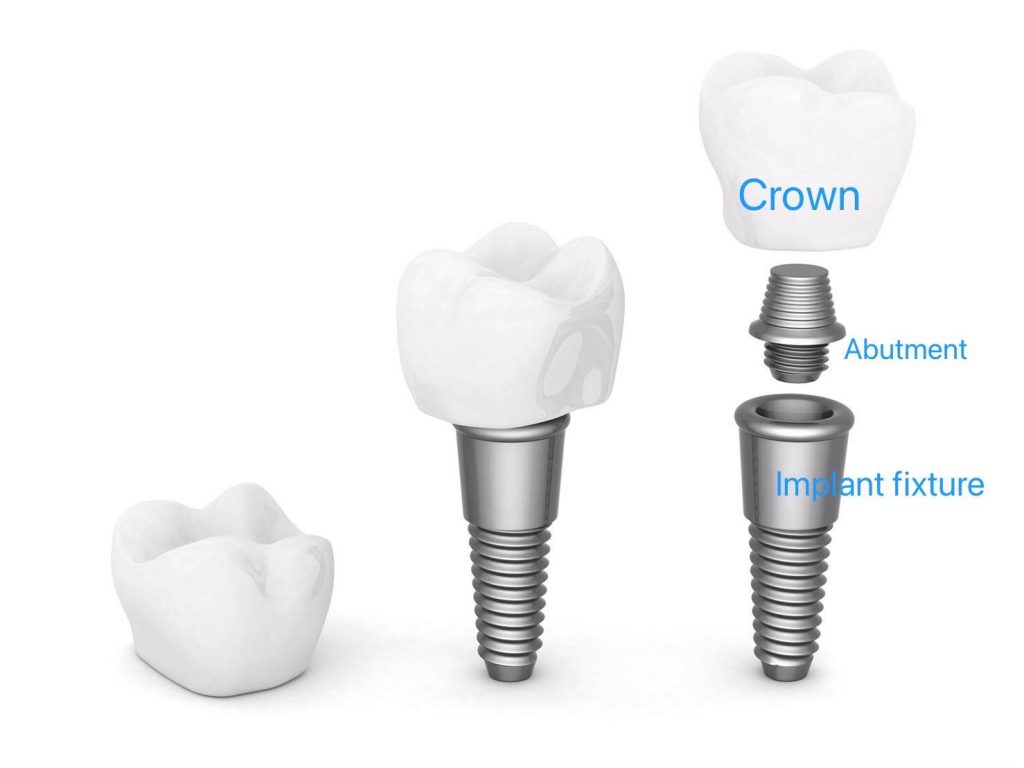
A dental implant consists of three main parts:
Implant:
This is the part inserted into the jawbone to function like a natural tooth root. It is typically made of titanium or other biocompatible materials such as ceramic or zirconia.
Abutment:
This component connects the implant to the prosthetic tooth. It is attached to the top of the implant and extends above the gum tissue.
Crown:
This is the visible replacement tooth used for chewing. The crown is placed on top of the abutment and functions like a natural tooth. It can be made from materials such as porcelain, ceramic, or composite to closely match the appearance, shape, color, and strength of a real tooth.
How Dental Implants Work
Dental implants work by replacing a missing natural tooth with a titanium root placed in the jawbone, allowing it to serve as a stable foundation for a replacement tooth.
- The implant is placed into the jawbone.
- The jawbone is then given time to grow and attach firmly to the implant surface.
- Once the implant has integrated well with the bone, the prosthetic tooth is attached on top.
- The implant can then be used for biting and chewing.
- Chewing forces are transferred from the crown to the implant and then into the jawbone.
What Are Dental Implants Made Of?
Most dental implants are made of titanium because it is strong, durable, and highly compatible with the human body. One of its key advantages is its ability to bond with the bone through osseointegration, creating a stable and strong foundation for the replacement tooth. Titanium is also well accepted by the body due to its high chemical stability, which helps reduce the risk of adverse reactions. However, if a patient is allergic to titanium, zirconia or ceramic implants may be used instead.
Types of Dental Implants
There are several types of dental implants. When classified by treatment timeline, they can generally be divided into three categories: Conventional Implant, Immediate Implant, and Immediate Loaded Implant.
Conventional Implant
A conventional implant is the traditional treatment approach and is completed in two main stages over several months. First, the damaged tooth is extracted, and the site is allowed to heal for about 3–6 months so the bone can recover fully. Then the implant is placed. After that, another 3–6 months is usually needed for the bone to bond firmly with the implant through osseointegration before the final crown is attached.
Immediate Implant
An immediate implant is placed into the jawbone immediately after tooth extraction. The main advantage is a shorter overall treatment time. However, the patient must first be evaluated by the dentist to confirm that the jawbone is strong and healthy enough. After placement, another 3–6 months is typically needed for the bone to integrate with the implant before the crown can be installed.
Immediate Loaded Implant
An immediate loaded implant involves placing the implant and fitting a temporary or permanent crown on the same day. This is also known as a same-day implant. To qualify for this option, the patient must have a jawbone that is strong and stable enough to support a crown immediately.
Dental Implant Procedure
The dental implant process generally involves the following main steps:
Evaluation and treatment planning:
The dentist examines the patient’s oral health, including the gums and jawbone. This may include X-rays, 3D CT scans, and digital treatment planning using 3D computer imaging. These tools help visualize bone structure and nerves before surgery and allow precise implant placement planning.
Oral preparation before implant placement:
The mouth is prepared for treatment, and teeth may be extracted if necessary. In cases where the jawbone is too thin or not strong enough, bone grafting may be required and may take 3–6 months to create a stable foundation for the implant.
Implant placement:
The dentist places the titanium or biocompatible implant structure into the jawbone. The gum tissue is then closed over the surgical area. Stitches are usually removed after about 7–14 days, and healing continues for approximately 3–6 months while the implant integrates with the bone through osseointegration.
Abutment placement:
Once osseointegration is complete, the abutment is placed. This is the connector that joins the implant to the final prosthetic tooth. This step usually takes about 1–2 weeks.
Prosthetic tooth installation:
This is the final stage. The prosthetic tooth is made to closely match the patient’s natural teeth in size, shape, and color. It may be a crown, bridge, or full denture, depending on the treatment plan. The dentist then carefully attaches it to the abutment to ensure a secure fit, proper bite alignment, and a natural overall appearance.
How to Prepare Before Getting Dental Implants
- Consult with a dental implant specialist to assess your oral condition, create a treatment plan, and choose the most suitable implant type and brand.
- Inform your dentist if you have any medical conditions or a history of drug allergies.
- If you smoke, stop smoking before and after the procedure, as smoking can slow healing.
- If you need multiple implants, full-mouth implants, or have significant bone loss, your dentist may recommend a 3D scan for more accurate treatment planning.
- Ask any questions or discuss any concerns you may have to reduce stress and anxiety before treatment.
- Eat foods you enjoy beforehand, as you may not be able to enjoy regular meals for several days afterward.
- Prepare soft foods in advance, such as rice porridge, since you will need to eat soft foods for a period of time.
- Get enough rest and try to sleep at least 8 hours the night before the procedure.
- Continue taking your regular medications unless your dentist tells you otherwise.
- Plan your transportation carefully. For example, you may want a family member to pick you up after the procedure, as you may feel tired afterward.
Who Is and Is Not Suitable for Dental Implants
Suitable for dental implants
- People with broken teeth or missing teeth due to injury
- People with healthy gums in the area where the implant will be placed
- People who have previously worn removable dentures but were not satisfied with the results
- People who are in generally good overall health
Not suitable for dental implants
- Children and teenagers whose bones have not fully developed and whose jawbones are not yet strong enough
- People with certain health conditions, such as uncontrolled diabetes, cancer requiring radiation therapy to the face or mouth, or diseases that affect wound healing
- Pregnant women, who should wait until after childbirth
- Patients taking immunosuppressive medication and smokers
Advantages of Dental Implants
- Strong and durable, with the potential to last for many years
- Closely resemble natural teeth in both shape and color
- Provide chewing efficiency comparable to natural teeth
- Help preserve the structure of the jawbone and face
- Cause fewer speech problems compared with other types of dentures
- Help improve confidence when speaking or smiling, and are easy to clean like natural teeth
- Do not require grinding down adjacent teeth
Disadvantages of Dental Implants
- More expensive than other tooth replacement options
- Take longer than other types of prosthetic treatment, sometimes several months or even up to a year
- Not suitable for children under 18 years old
- Carry a risk of infection during the implant process
- Require ongoing care and maintenance, just like natural teeth
- In some cases, the body may not accept the implant
- Patients with certain medical conditions may not be suitable candidates and should consult a dentist first
Comparison: Dental Implant vs Bridge vs Removable Denture
| Feature | Dental Implant | Fixed Bridge | Removable Denture |
| How it works | Implant placed in the jawbone and topped with a crown | Two or more artificial teeth supported by adjacent natural teeth, with one replacing the missing tooth | Acrylic or metal-based denture with artificial teeth that can be removed for cleaning |
| Need to trim adjacent teeth | No | Yes, adjacent teeth must be prepared to support the bridge | No |
| Procedure & treatment time | 2–3 stages (surgery → healing for 3–6 months → crown placement), total about 4–9 months | 2–3 visits over 1–3 weeks | 2–5 visits over 1–6 weeks |
| Bone preservation | Implant integrates with bone and helps slow bone loss | Bone under the gap continues to resorb naturally | Bone loss occurs fastest, especially with full dentures |
| Esthetics | Most natural-looking | High, especially with ceramic crowns | Moderate to good, depending on type and metal visibility |
| Chewing efficiency | Closest to natural teeth (90–100%) | 60–80% | Partial denture: 40–60% / Full denture: 20–40% |
| Comfort & speech | Feels like a natural tooth | Feels like a natural tooth | Requires adjustment; may irritate the palate or cheeks |
| Average lifespan | 15–25 years or longer; possibly lifelong with proper care | 7–15 years | 3–8 years |
| Maintenance | Brushing, flossing, floss threaders under the crown, and regular dental checkups | Similar to crown care, with emphasis on cleaning under the pontic | Must be removed and soaked daily; clean with a soft brush |
| Side effects / risks | Surgery-related infection, implant failure to integrate (1–5%) | Decay or fracture of supporting teeth, gum recession under the pontic | Gum irritation, sensitivity in supporting teeth, speech difficulties at first |
| Health limitations | Requires sufficient bone; diabetes and smoking must be controlled | Adjacent teeth must be healthy enough | Fewer medical limitations, but lower function |
| Approximate cost | 38,000–75,000 THB per tooth, including crown | 10,000–20,000 THB per tooth | 5,000–20,000 THB for partial / 20,000–45,000 THB for full denture |
| Best for | People missing 1–3 teeth or more who want function and appearance closest to natural teeth and have good bone support | People missing 1–2 adjacent teeth with healthy neighboring teeth | Older adults missing multiple teeth, those with limited budgets, or severe bone loss |
How to Care for Teeth After Dental Implant Placement
The first few days after getting a dental implant are especially important. Avoid chewing on the implant area and stick to soft foods that are easy to chew for about 1–2 months. In the beginning, avoid foods and drinks that are extremely hot or cold. Do not smoke or drink alcohol, as these can slow healing. Brush gently around the surgical site and use mouthwash to reduce the risk of infection. Also, monitor whether pain and swelling gradually decrease over time.
Dental implants can last 15–20 years, and with good care, they may even last a lifetime.
Risks and Complications
Although dental implant outcomes are generally very good and can be close to those of natural teeth, there are still potential risks and complications, even if they are uncommon. These may include infection after surgery, numbness caused by nerve involvement, bone loss around the implant leading to loosening, or failure of the implant to integrate with the bone. Regular follow-up visits with the dentist help detect problems early and reduce the risk of complications.
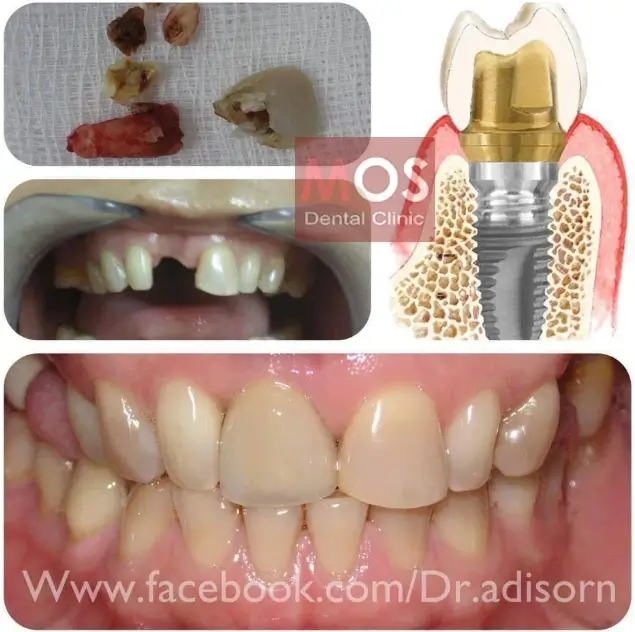
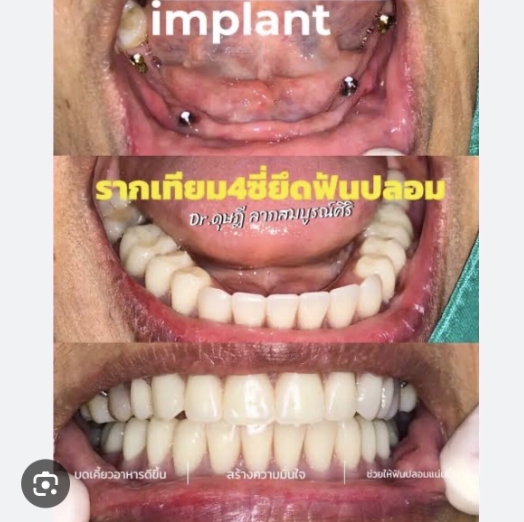
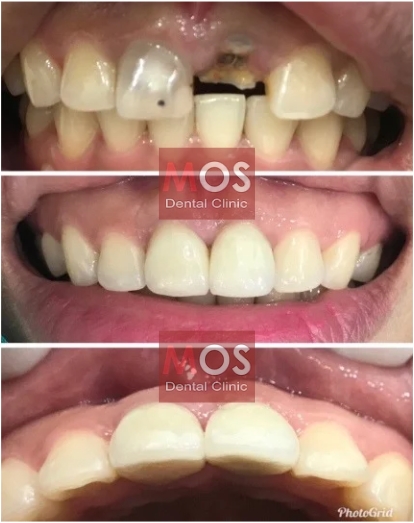
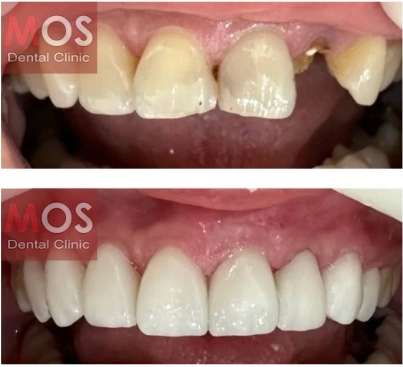
Dental Implant Case Reviews
Dental Implant Prices
| Item | Price (THB) |
| Korean dental implants (Osstem, Neo Biotech) | 38,000–50,000 |
| Alpha Bio, MIS7 dental implants | 50,000 |
| Straumann dental implants | 75,000 |
| Neo Dent ceramic dental implants | 75,000–95,000 |
| Ceramic dental implants | 75,000 |
The prices above do not include dental impressions, X-rays, bone grafting if needed, sinus lift procedures, medications, or other medical supplies.
All dental implant treatments can be paid in installments.
Frequently Asked Questions About Dental Implants
Why do some people need bone grafting together with dental implants?
Bone grafting is needed when there is not enough bone, or the bone is not strong enough, in the area where the implant will be placed. This can happen due to long-term tooth loss, periodontal disease, or bone loss in the jaw.
How long do dental implants last?
In general, dental implants can last 10–20 years or even longer. Their longevity depends on oral hygiene and overall oral health.
Does getting a dental implant hurt?
Local anesthesia is used during the procedure, so patients do not feel pain while the implant is being placed. After the anesthesia wears off, if the patient has strong and healthy bone, the discomfort is usually comparable to that of a tooth extraction.
Can you get braces with dental implants?
Dental implants cannot move like natural teeth, so orthodontic treatment should ideally be completed before implant placement. However, if the implant is already in a good position and does not need to be moved, orthodontic treatment may still be possible.
How long does dental implant treatment take?
The process may take several months to up to a year, depending on many factors such as jawbone condition, healing after surgery, and whether bone grafting is needed.
What should I do if a dental implant becomes inflamed?
If inflammation develops around a dental implant, you should contact your dentist as soon as possible for diagnosis and treatment. Treatment may include cleaning around the implant, antibiotics, and in severe cases, surgery.
Where Should You Get Dental Implants?
If you are still unsure where to get dental implants, MOS Dental Clinic would like to be one of your options. We placed our first dental implant in 2002, and since then we have provided at least 2,000 implants. We have continuously followed up and cared for every implant for nearly 20 years through all 32 MOS Dental branches across Bangkok and surrounding areas. So if any issues arise in the future, even many years from now, you can feel confident that you will continue to receive proper care from us.
