
What is an impacted wisdom tooth?
An impacted wisdom tooth is a third molar that cannot erupt normally because the jaw does not have enough space or another tooth blocks its path. Impacted wisdom teeth usually develop at the back of the mouth.
A wisdom tooth may be:
- fully trapped under the gum
- partially erupted
- tilted forward, backward, or sideways
- pressing against the tooth next to it
What is the difference between wisdom tooth extraction and wisdom tooth surgery?
Wisdom tooth extraction removes a tooth that has erupted normally. Wisdom tooth surgery removes a tooth that cannot erupt normally and often requires a gum incision, bone removal, or sectioning the tooth.
Wisdom tooth extraction
- Tooth erupts into the mouth
- Dentist removes it with standard instruments
- Stitches are often unnecessary
- Procedure is usually simpler
- Cost is usually lower
Wisdom tooth surgery
- Tooth stays trapped, tilted, or blocked
- Dentist opens the gum
- Dentist may remove bone or divide the tooth
- Stitches are usually required
- Procedure is usually more complex
- Cost is usually higher
Why does a wisdom tooth become impacted?
Impacted wisdom teeth develop when the tooth lacks space to erupt or another tooth blocks its path. The tooth may then remain under the gum, tilt at an angle, or grow sideways.
Common eruption patterns include:
- vertical
- horizontal
- mesioangular
- distoangular
- inverted
- linguoangular
- buccoangular
What symptoms mean you may need wisdom tooth surgery?
Wisdom tooth surgery may be necessary when the impacted tooth causes pain, infection, swelling, pressure, or damage to nearby teeth.
Common warning signs include:
- severe pain around the wisdom tooth
- swollen or inflamed gums
- facial swelling
- pain when swallowing
- difficulty opening the mouth
- decay in the neighboring tooth
- cyst formation around the tooth
Why is wisdom tooth surgery necessary?
Wisdom tooth surgery prevents infection, protects nearby teeth, and reduces the risk of bone damage.
- It reduces gum infection risk
A partially erupted or tilted wisdom tooth traps food and bacteria under the gum. That trapped debris can cause pain, swelling, pus, and infection.
- It protects the tooth next to it
A poorly positioned wisdom tooth makes cleaning difficult. Food and plaque collect between the teeth and can cause decay in the adjacent molar.
- It helps prevent bone damage
Pressure from an impacted wisdom tooth can damage the supporting bone around the roots of the neighboring tooth.
What kind of wisdom tooth does not need surgery?
A wisdom tooth may not need surgery when it erupts in the correct position, has enough space, does not crowd other teeth, and causes no pain, inflammation, or infection.
A dentist should still examine the tooth because some wisdom teeth look normal but remain difficult to clean.
How can you tell if you have a wisdom tooth?
A dental X-ray confirms whether you have a wisdom tooth. Tooth counting only gives a rough estimate.
If you are 17 or older, you may expect up to 32 permanent teeth. If you count 28 teeth, the remaining 4 may be wisdom teeth that are still under the gums. A dentist can confirm their position with an X-ray.
How should you prepare before wisdom tooth surgery?
Good preparation reduces stress, supports healing, and helps the procedure go more smoothly.
Before surgery:
- tell your dentist about conditions such as diabetes, heart disease, or hepatitis
- choose a day when you can rest after treatment
- eat a moderate meal before the procedure
- ask about medication and stitch removal in advance
- avoid alcohol before surgery
What happens during wisdom tooth surgery?
Wisdom tooth surgery usually follows a standard step-by-step process.
Typical steps include:
- The dentist takes an X-ray.
- The dentist injects local anesthesia.
- The dentist opens the gum over the tooth.
- The dentist may remove a small amount of bone.
- The dentist removes the tooth.
- The dentist closes the area with stitches.
- The patient bites on gauze for 2–3 hours.
How long does wisdom tooth surgery take?
Wisdom tooth surgery usually takes about 30–60 minutes, depending on tooth position, root shape, tilt, and whether infection or deep bone impaction is present.
Simpler cases may finish faster. Deeper or more complex impactions usually take longer.
Does wisdom tooth surgery hurt?
Wisdom tooth surgery should not hurt during the procedure once the local anesthesia takes effect. Pain usually begins after the anesthesia wears off.
Pain often occurs during 2 periods:
- during the anesthetic injection
- after the numbness fades
Pain level varies by case. Teeth close to a nerve may produce more postoperative discomfort.
How many days does pain last after wisdom tooth surgery?
Pain usually peaks on days 2–3 and then gradually improves. Many patients feel noticeably better after day 4.
Some discomfort can continue during days 5–7. Pain that worsens instead of improving may signal a problem.
What is the normal recovery timeline after wisdom tooth surgery?
Recovery after wisdom tooth surgery happens in stages. Soft tissue usually improves in about 1–2 weeks, while bone healing takes much longer.
Immediately after surgery
- mild bleeding or oozing may continue for 2–6 hours
- pain starts after anesthesia wears off
- bite firmly on gauze
- avoid spitting, straws, smoking, and alcohol
First 24 hours
- swelling, pain, and tightness remain common
- mouth opening may feel limited
- use a cold compress
- eat soft foods
Days 2–3
- swelling and pain often peak
- cheek or chin bruising may appear
- warm compresses may start later as advised
- brush gently
Days 4–7
- swelling and pain should start decreasing
- mouth opening often improves
- keep the area clean
- continue soft, easy-to-chew foods
Week 2
- gum tissue is usually much more closed
- pain is usually minimal
- mild itching may occur during healing
- light exercise is often acceptable
- heavy exercise should still be avoided
Weeks 3–4
- chewing continues to improve
- deeper tissue healing continues
Weeks 6–8
- the surgical site improves significantly
- most people feel close to fully recovered
Months 3–4 or longer
- bone continues filling the socket under the gum
What is the most important thing after wisdom tooth surgery?
Stopping the bleeding is the most important first step after wisdom tooth surgery. Healing begins once a stable blood clot forms in the wound.
During the first 2 hours:
- bite firmly on the gauze
- swallow normally
- do not spit
- do not suck the wound
- do not poke the area with your tongue
These actions protect the blood clot and reduce the risk of renewed bleeding.
How should you care for yourself after wisdom tooth surgery?
Care after wisdom tooth surgery should protect the blood clot, reduce swelling, and keep the mouth clean.
Day 1
- bite on gauze for the first 2 hours
- rest
- avoid smoking and strenuous exercise
- eat soft foods
- brush gently with a soft toothbrush
- take medication exactly as prescribed
Days 2–3
- continue resting
- use cold compresses
- brush gently
- rinse gently only if advised
- watch for unusual symptoms
Days 5–7
- swelling should begin decreasing
- warm compresses may help circulation and bruising
Around day 7
- return for stitch removal and follow-up
What can you eat after wisdom tooth surgery?

Soft foods help protect the wound and reduce chewing stress after wisdom tooth surgery.
Recommended foods include:
- rice porridge
- boiled rice soup
- mashed potatoes
- soup
- clear broth
- steamed egg custard
- milk
- yogurt
- fruit juice
- mashed fruit
Foods should be soft, easy to swallow, and low in irritation.
What should you avoid eating after wisdom tooth surgery?
Hard, chewy, spicy, and particle-filled foods can irritate the wound, restart bleeding, or become trapped in the surgical area.
Avoid:
- large pieces of meat
- crunchy vegetables
- nuts
- crispy bread
- spicy soups and curries
- fatty or chewy meat
- pork skin
- alcohol
Also avoid drinking through a straw because suction can dislodge the blood clot.
When can you eat normally again after wisdom tooth removal?
Most patients return to more normal eating gradually over several days to 1 week, but very hard or crispy foods should wait until the wound heals more fully.
A practical timeline:
- Days 1–2: soft foods only
- After 2 days: try slightly firmer foods if comfortable
- After 1 week: many patients tolerate a more normal diet
- Around 2 weeks or longer: harder foods may become easier once healing improves
Healing speed varies by case.
How do you clean your mouth after wisdom tooth surgery?
Gentle cleaning lowers infection risk without disturbing the wound.
Recommended care:
- brush teeth gently at least twice daily
- avoid scrubbing directly over the wound
- rinse gently with warm salt water if advised
- use fluoride mouthwash when appropriate
- avoid smoking and straws
What symptoms are NOT normal after wisdom tooth surgery?
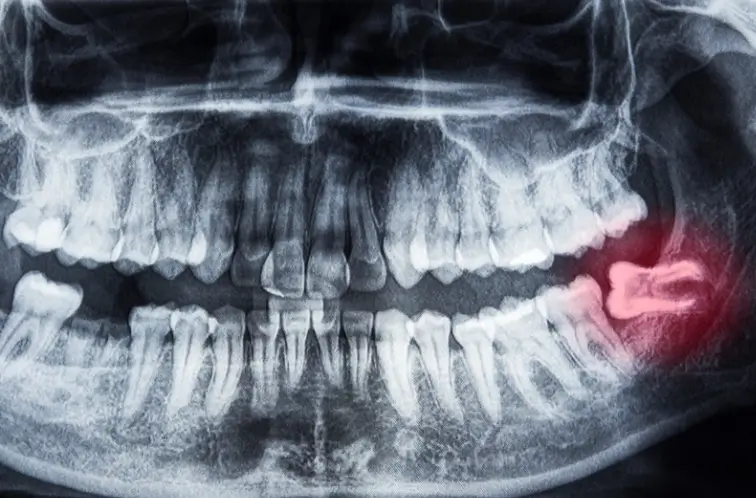
Pain that worsens, persistent bleeding, high fever, severe swelling, strong bad breath, nausea, or difficulty opening the mouth beyond the expected recovery period may indicate a complication.
You should contact the clinic promptly if you have:
- significant pain that does not improve
- persistent or heavy bleeding
- fever
- worsening swelling
- foul odor from the wound
- trouble swallowing or opening the mouth
- severe symptoms after the first week
Can wisdom tooth surgery make the jaw smaller?
Wisdom tooth surgery does not make the jaw smaller. The procedure removes the tooth, not the jaw structure.
A dentist may remove a small amount of bone to access the tooth, but the body naturally rebuilds bone in the area during healing.
Why can lip numbness last after wisdom tooth surgery?
Lip numbness can last when the wisdom tooth lies very close to a nerve or when the surgical area experiences nerve irritation.
This numbness is often not dangerous, but it should be evaluated by a dentist, especially if it lasts for months.
Should wisdom teeth be removed before braces?
Wisdom teeth are often removed before braces because surgery becomes more difficult once orthodontic appliances are already in place.
Early removal can also make oral hygiene easier and reduce the risk of decay or inflammation during orthodontic treatment.
If a wisdom tooth has erupted, does it still need removal?
An erupted wisdom tooth does not always need removal, but a dentist should still evaluate it.
Removal may still be recommended when the tooth:
- erupts only partially
- remains partly covered by gum
- sits too far back to clean well
- causes decay, bad breath, or repeated inflammation
How much does wisdom tooth surgery cost?
At MOS Dental Clinic, wisdom tooth surgery costs about 3,600–4,500 THB, depending on tooth position, case difficulty, and clinical factors.
Price usually depends on:
- depth of impaction
- tooth angle
- upper or lower tooth position
- surgical complexity
- dentist experience
- clinic standards
Prices may change over time, so direct confirmation with the clinic is best.
Quick FAQ
How long does swelling last after wisdom tooth surgery?
Swelling usually becomes worse during the first 2–3 days and then gradually improves.
Is pain on days 5–7 normal?
Mild pain on days 5–7 can still be normal if it keeps improving. Worsening pain is not normal.
Can I exercise after wisdom tooth surgery?
Light activity may be possible later, but heavy exercise should be avoided early because it can restart bleeding.
Can I use a straw after surgery?
No. Straw suction can pull out the blood clot and delay healing.
When should I return to the dentist?
Many patients return around day 7 for stitch removal and a follow-up visit, or earlier if symptoms become abnormal.
