
Invisalign is a type of orthodontic treatment that uses a special clear material, making it much less noticeable than traditional braces. It is a modern orthodontic innovation that uses thin, transparent plastic trays called aligners to move the teeth instead of metal brackets and wires. The treatment also uses advanced technology, including 3D scanning and AI-assisted treatment planning, to create a customized set of aligners for each patient.

The aligners are made from a material called SmartTrack, which is highly flexible and has excellent shape memory. This material delivers gentle, continuous force to guide the teeth into the desired position according to the treatment plan. Clear aligners can correct many types of orthodontic issues, such as crowded teeth, spacing, crooked teeth, and bite problems. In many cases, treatment can take less time than conventional metal braces. Patients typically wear each set of aligners for 1–2 weeks before moving on to the next set, gradually shifting the teeth little by little according to the treatment plan.
One of the key advantages of Invisalign is that the aligners can be removed while eating, so patients do not need to avoid hard or sticky foods. They also make oral hygiene much easier compared with traditional braces. For this reason, Invisalign is ideal for people who want both confidence and convenience during orthodontic treatment.
How Does Invisalign Work?
Invisalign works through the combination of three key components: SmartTrack, SmartForce, and SmartStage. These three systems work together to make tooth movement as effective and efficient as possible.
SmartTrack
SmartTrack is the material used to manufacture Invisalign aligners. It is a thin, transparent plastic with high flexibility and excellent shape memory. This material applies gentle, continuous force to the teeth, helping them gradually move into the positions planned by the dentist.
SmartForce
SmartForce is the force delivery system used to move the teeth. It works together with attachments—small tooth-colored bumps bonded to certain teeth—to help control the direction and amount of force applied. This allows the teeth to move and rotate more precisely and effectively.
SmartStage
SmartStage uses 3D software to plan tooth movement step by step. It simulates gradual tooth movement and calculates the most efficient sequence for each tooth to move. This helps achieve the desired result in the shortest possible time while also reducing discomfort during treatment.
Because SmartTrack, SmartForce, and SmartStage work together, Invisalign can move teeth efficiently, accurately, and with less discomfort for the patient.
The Invisalign Treatment Process
The Invisalign process usually includes the following steps:
- Consultation with the dentist
The dentist examines your teeth, takes photographs and X-rays, and creates a dental model. This model may be made using either traditional impressions or a digital scan. - 3D treatment planning with ClinCheck
The dentist uses Align Technology’s ClinCheck software to create a 3D model that shows how the teeth will move throughout different stages of treatment, even before treatment begins. - Sending the patient’s dental model to the U.S.
The dentist sends each patient’s dental model to the company that owns the Invisalign technology in the United States. - The Invisalign aligners are sent back to Thailand
Once manufactured, the aligners are shipped back to Thailand. - Receiving the aligners
The dentist provides the patient with a number of aligners to take home. Patients must wear them every day and change to a new set approximately every two weeks. Treatment time varies from person to person. - Regular follow-up visits
Patients usually return to see the dentist every 6–8 weeks for monitoring, progress checks, and to receive the next sets of aligners until treatment is complete.
What Is the iTero Scanner?

The iTero scanner is used to capture a 3D digital scan of the patient’s teeth, replacing traditional dental impressions. It records details such as tooth position, size, and alignment, which are then used to create a precise digital model.
Once the scan is complete, the file can be sent directly to the company online, allowing the aligners to be produced faster and more accurately.
What Is ClinCheck?

ClinCheck is a simulation of tooth movement from the beginning to the end of treatment. It is extremely useful because it allows both the dentist and the patient to see the treatment process in advance, even before it starts.
It also shows the total number of trays needed and the estimated treatment duration, helping ensure that the teeth move into the right positions at the right time.
What Are Attachments?
Attachments, sometimes called buttons, are small fixtures bonded securely to the teeth. They help control pressure, force, and the direction of tooth movement.
These attachments usually remain in place until treatment is complete. If one comes off, the patient should inform the dentist as soon as possible so it can be replaced.

Appliances Used in Invisalign Treatment
The appliances used in Invisalign treatment include:
- Aligners
Made from a special polymer plastic, aligners fit over the teeth to guide them into the planned position. They can be removed and reinserted by the patient. They are sometimes also called trays. - Attachments or buttons
These are bonded to the teeth to help move them into the desired position. They cannot be removed by the patient. - Elastics
These may be used in cases where the teeth and jaws need to be aligned more properly.
Invisalign Is Very Hard to Notice
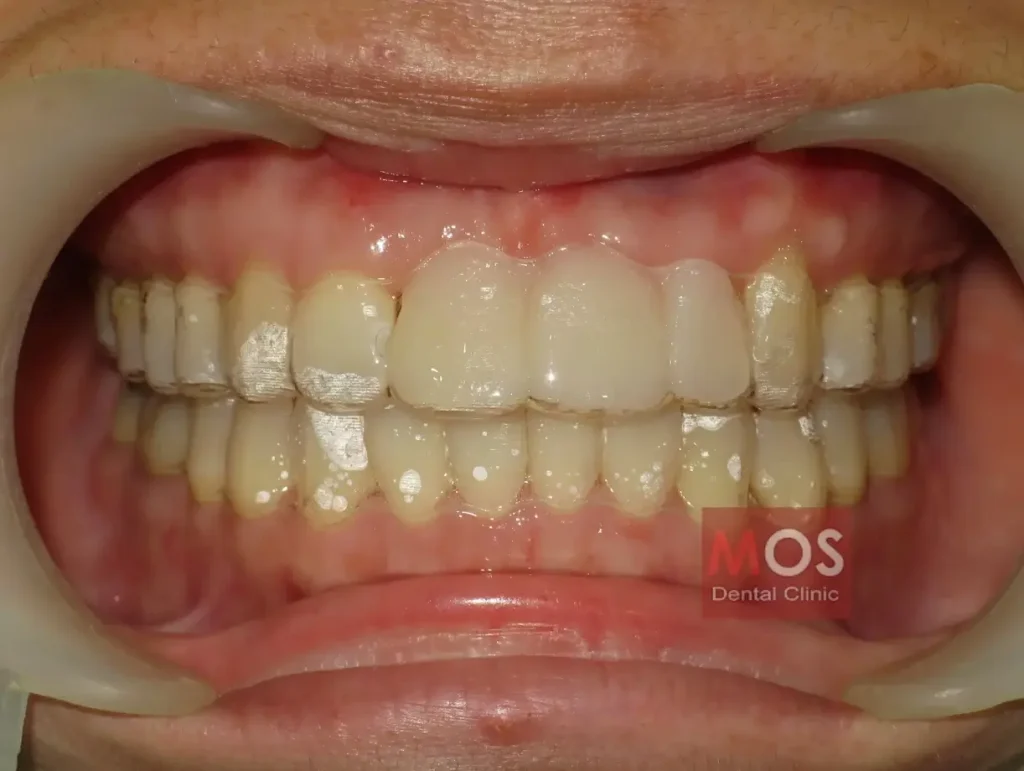
Because Invisalign aligners are clear, they are much less visible than conventional braces, making them a popular choice for patients who want a more discreet orthodontic option.
How Many Types of Invisalign Are There?
Because clear aligner treatment can be relatively expensive, Invisalign offers several treatment packages at different price levels. This makes treatment more accessible for people who do not need comprehensive orthodontic correction.
There are 5 main Invisalign packages:
- Invisalign Go
Suitable for patients who want to correct only the front teeth. - Invisalign Express or Invisalign i7
Designed for very minor tooth movement, using no more than 7 aligners. - Invisalign Lite
Suitable for moderate cases, using approximately 7–14 aligners. - Invisalign Essential
Suitable for treatment lasting around 10 months, using up to 20 aligners. - Invisalign Full or Invisalign Comprehensive
This is the highest-tier and most expensive package. It is suitable for more complex cases or cases that require a high level of precision. The number of aligners is not limited, and treatment can continue for up to 5 years.
The Difference Between Invisalign and Traditional Braces
The main differences between Invisalign and conventional braces are as follows:
Less noticeable
Invisalign uses clear trays, so it is much harder to see compared with traditional braces, where the metal brackets and elastic bands are clearly visible.
More convenient
Clear aligners can be removed when eating or brushing, while traditional braces cannot. Traditional braces also require more careful cleaning because food can easily get trapped around the brackets and wires.
Treatment duration
On average, Invisalign treatment takes around 12–24 months, depending on the case. Metal braces generally take around 12–36 months, also depending on the complexity of the case.
Cost
Invisalign tends to cost more than metal braces because it uses newer technology and imported materials.
Precision of tooth movement
Invisalign can control tooth movement more precisely, moving the teeth gradually according to each aligner. Patients can also preview every stage of tooth movement in the simulation before treatment begins. Traditional braces, by contrast, rely more on pulling and adjusting the teeth over time.
Fewer dental visits
Invisalign patients usually visit the dentist less often because they can take several sets of aligners home at once. With traditional braces, patients usually need monthly adjustment appointments.
How to Care for Invisalign Aligners
Proper Invisalign care during treatment includes the following:
Cleaning the aligners
- Use a soft toothbrush and cold water to clean them. Do not use hot water, as it can warp the aligners and affect the fit.
- Avoid soap or chemical cleaning agents, as these may stain or damage the aligners.
Storing the aligners
- Always keep the aligners in the storage case provided to prevent damage. Do not wrap them in tissue, as they can easily be thrown away by accident.
- Avoid leaving them in hot places, such as inside a car or in direct sunlight.
- Do not bend or twist the aligners, as this may affect how they fit on the teeth.
During daily use
- Wear the aligners for 20–22 hours per day, following the dentist’s instructions.
- Remove them only when eating, drinking hot beverages, or brushing and rinsing the mouth.
- If an attachment or button comes off, contact the dentist promptly to have it replaced.
Following these instructions will help keep the aligners in good condition and ensure effective tooth movement according to the treatment plan.
How Long Does Invisalign Take?
The length of Invisalign treatment depends on how simple or complex the case is. On average, treatment takes about 1–2 years. Full treatment for more difficult cases may take around 2 years, while simpler cases—such as mild spacing or slight crowding—may take only a few months.
Who Is Invisalign Suitable For?
Invisalign is especially suitable for people whose work involves meeting others frequently and who prefer not to have obvious orthodontic appliances, such as sales professionals, flight attendants, actors, singers, performers, and presenters.
How Often Do You Change Invisalign Aligners?
In general, Invisalign aligners are changed every 2 weeks. However, the best approach is always to follow the dentist’s instructions, because every patient is different. Some people may need to wear each set longer if they forget to put the aligners back in, do not wear them for enough hours per day, or if their teeth move more slowly than expected.
Recommendations During Invisalign Treatment
- Wear the aligners as directed, ideally 20–22 hours per day, removing them only when eating, drinking hot beverages, or cleaning your teeth.
- Brush and floss after every meal before putting the aligners back in.
- Clean the aligners only with a soft toothbrush and cold water. Do not use hot water.
- Change the aligners according to the schedule given by your dentist.
- Always carry the aligner case with you when eating out.
- Do not wrap the aligners in tissue, as they can easily be thrown away accidentally.
- Avoid colored beverages while wearing the aligners, as they may stain.
How Much Does Invisalign Cost?
| Package | Initial Payment | Remaining Payment | Total |
| Invisalign Full (5 years) | 38,000 x 3 | 4,000 x 12 | 162,000 THB |
| Invisalign Full (3 years) | 35,000 x 3 | 4,000 x 10 | 145,000 THB |
| Invisalign Essentials | 25,000 x 3 | 2,800 x 5 | 89,000 THB |
| Invisalign Go | 29,500 x 2 | – | 59,000 THB |
| Vivera Retainers (3 pairs) | 25,000 | – | – |
| Vivera Retainers (1 pair) | 12,000 | – | – |
Free of charge: consultation, oral photographs, attachments, IPR (interproximal reduction / enamel contouring), and scanning according to the package.
Note: The prices and treatment durations listed above are preliminary estimates only. The actual cost may vary depending on the patient’s oral condition, the dentist’s treatment plan, and any clinic promotions available at the time.
Advantages and Disadvantages of Invisalign
Advantages
- Very discreet
Most people will not notice that you are wearing braces. - Comfortable to wear
There are no metal brackets or wires rubbing against the lips or tongue. - Removable
Eating is more comfortable because nothing gets stuck in the teeth, and you can brush and floss normally after removing the aligners. This also reduces the risk of cavities and gum inflammation. - You can preview the results before treatment begins
With the 3D treatment simulation, patients can see how their teeth are expected to move from start to finish, giving them a clearer picture of the expected outcome.
Disadvantages / Limitations
- More expensive than other types of braces
The technology and materials are more costly. - Treatment may be delayed if the patient does not wear the aligners properly
If the patient forgets to put them back in or does not wear them for the required number of hours, the results may take longer than expected. - Treatment planning takes time
The planning stage can take several weeks because the digital files must be sent to the company in the U.S., the full series of aligners must be manufactured, and then shipped back to Thailand.
Where Should You Get Invisalign Treatment?
When choosing where to get Invisalign treatment, it is important to choose a clinic that meets professional standards, is licensed by the Ministry of Public Health, and has a team of dentists certified by the Dental Council.
MOS Dental Clinic has as many as 32 branches, making it easy to choose the most convenient location.

In addition, MOS Dental Clinic has received the Diamond Provider award from the Invisalign System continuously every year from 2018 to the present.
Invisalign Reviews
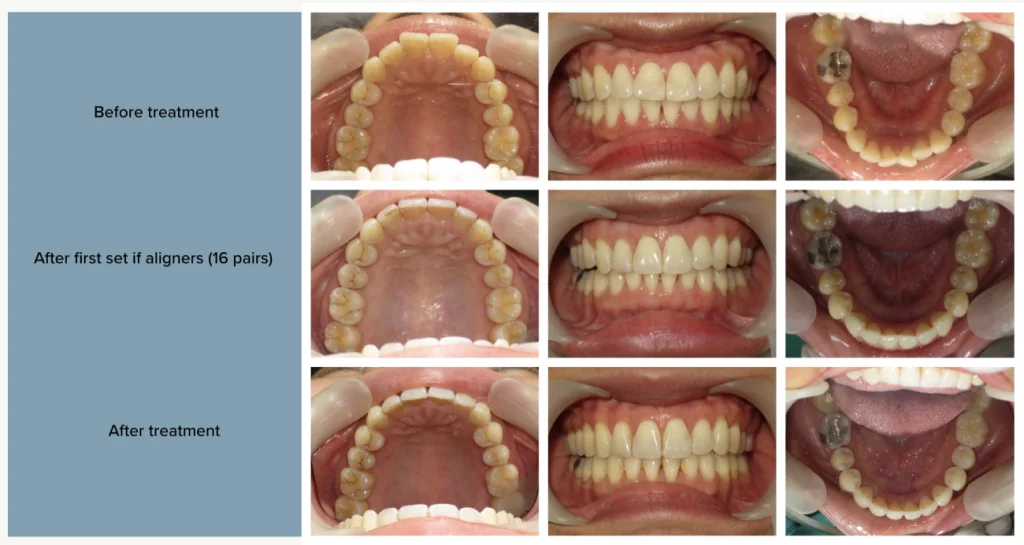
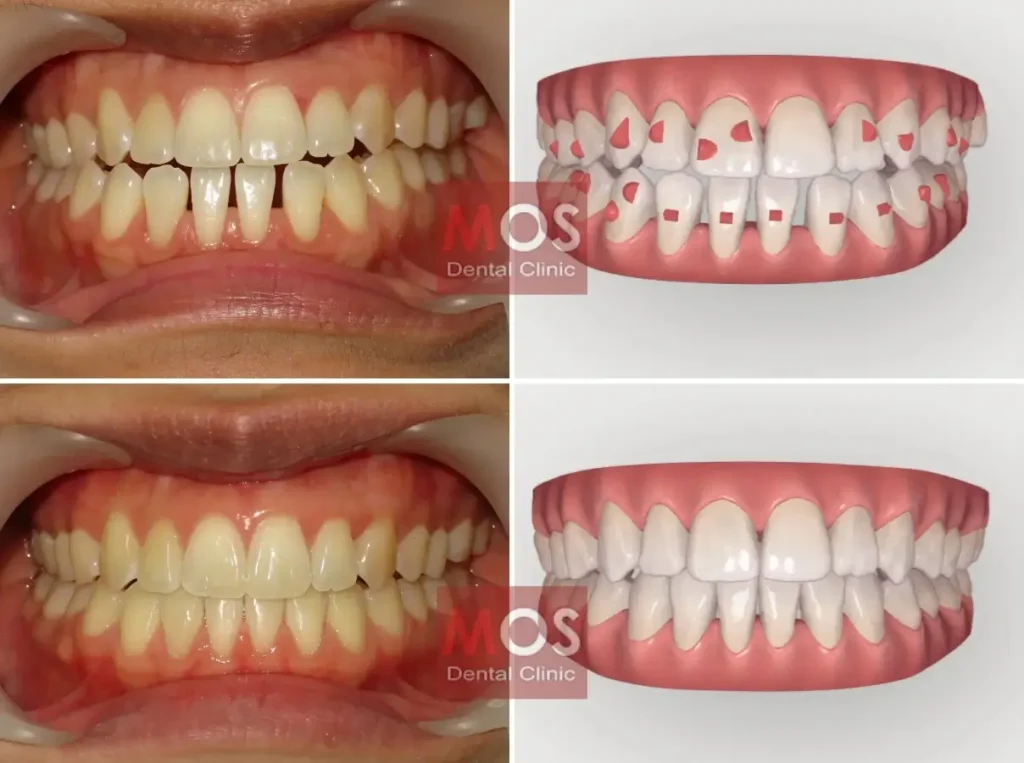
Frequently Asked Questions About Invisalign
1. Does Invisalign affect speech?
Invisalign may affect speech slightly during the first 1–3 days, but after that most patients adapt quickly and can speak normally, just like with other types of braces.
2. How often do I need to see the dentist during Invisalign treatment?
In general, patients are scheduled to see the dentist every 6–8 weeks. Some patients think that once they receive all their aligners, they no longer need check-ups, but this is not recommended. Regular visits are important so the dentist can check your teeth and orthodontic appliances—for example, to make sure the attachments are still in place, replace any that have come off, check whether any aligners are damaged, and monitor important transitions between trays.
3. Can Invisalign become stained by food?
In general, dentists recommend removing the aligners while eating. However, if the dentist advises the patient to keep them in, Invisalign may become stained by food or by beverages such as coffee. In such cases, the aligners should be removed and cleaned to prevent staining.
4. Do I need tooth extraction before Invisalign?
That depends on the individual case. If the patient has severe crowding or significant protrusion, tooth extraction may be necessary in combination with Invisalign to create space and close the gaps properly.
5. What happens if I do not wear the aligners for 22 hours a day?
If the aligners are not worn for the recommended 22 hours per day, treatment will not be as effective and may take longer. If the missing wear time is significant, the patient may even need to go back to the previous aligner.
6. Does frequently removing and reinserting the aligners affect treatment?
If the aligners are removed frequently during the day but the total wear time still reaches 22 hours, it is generally acceptable. However, in reality, frequent removal often leads to forgetting to put them back in, which can slow down treatment. Ideally, they should be removed only when eating.
7. Is Invisalign painful?
Invisalign can cause some tightness or mild discomfort, especially when switching to a new aligner. This usually lasts for about 3–4 days after changing trays, rather than throughout the entire treatment period. This happens because all orthodontic treatment involves moving and rotating the teeth within the jawbone, which temporarily creates pressure and discomfort.
Which Clear Aligner Brand Is Best?
There are actually several clear aligner brands available. Popular brands in Thailand include Invisalign, Zenyum, Dr Clear Aligners, BeforeDent, and Crystal Smile.
You can read more in the article about which clear aligner brand is best to compare the advantages and pricing of each brand and choose the one that suits you best.
